

France and the nation nobody voted for
Europe is trying to build a people by regulation. The French were among the first to say no.
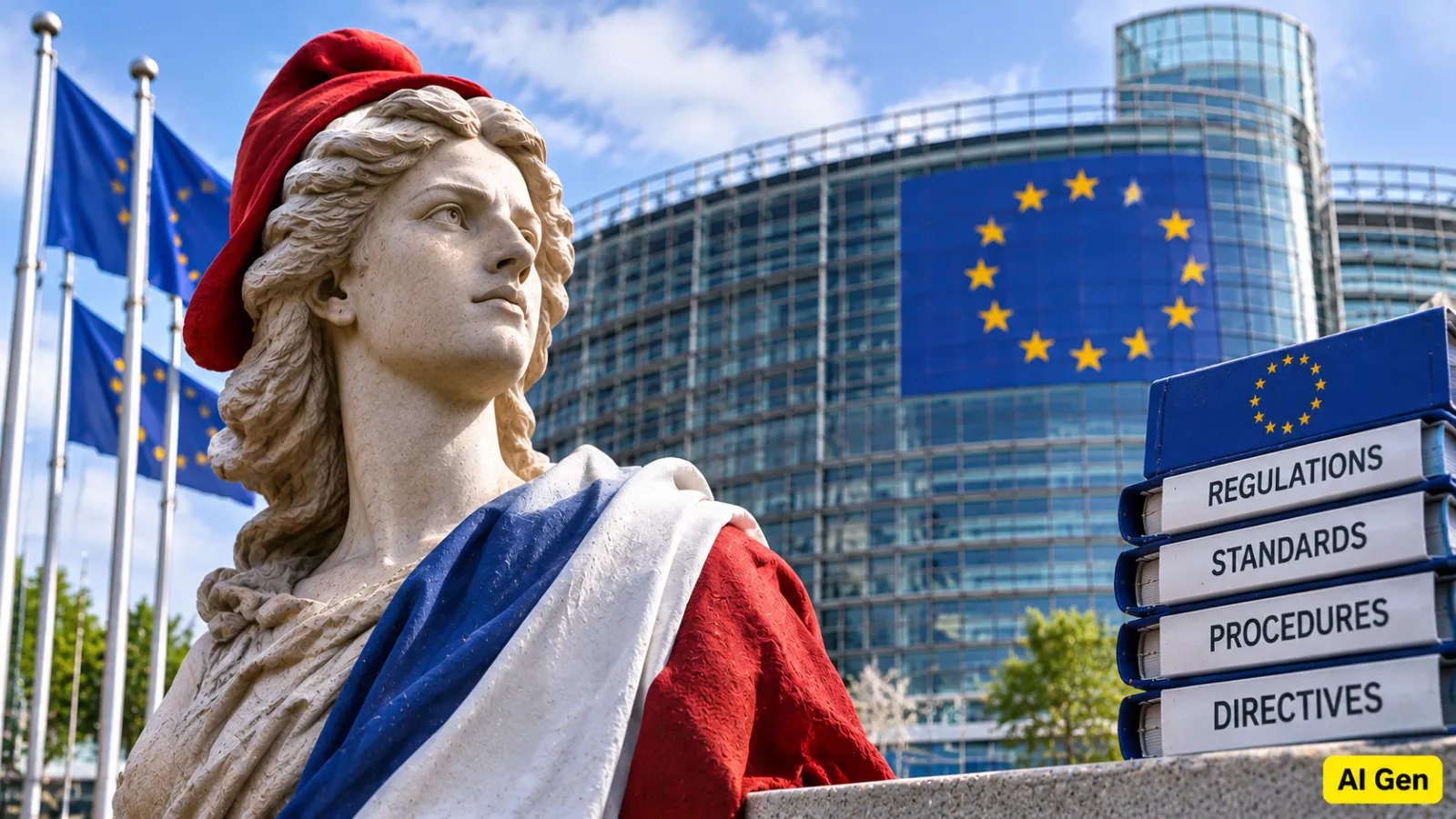
No nation in history has been summoned into being by regulation. Rome did not make Italy with directives. Germany was unified by war and iron, not by committees. Switzerland has three main languages and seven centuries of shared cantonal fate. Everywhere, the same raw material: a language, a memory, shared suffering, the dark and powerful feeling of belonging to one destiny.
The European Union is attempting something else: a “meta-nation” of 27 countries, built without that cement. It is assembled one standard and one procedure at a time.
The method is French. Jean Monnet, a cognac merchant’s son turned planner, designed it after 1945. Integration would advance through technical matters, not politics. Citizens would accept Europe through accomplished facts long before they accepted it by conviction.
There would be no founding vote. Consent would come later, once the results arrived.
For forty years, the bargain held. Growth, open borders and lasting peace between nations that had bled each other for centuries were real.
People followed without asking too many questions.
Then the results faltered. In 2024, Mario Draghi, the former head of the European Central Bank, delivered a report commissioned by Brussels itself. It described a widening productivity gap and no global tech champion in decades. It also called for 800 billion euros of extra investment every year.
When results stop justifying the system, what remains is the democratic deficit, exposed.
The legal scholar Joseph Weiler gave it a name: the “no demos” problem.
Democracy assumes a people that recognizes itself as one. Europe can elect a parliament and run a central bank and a budget of nearly 190 billion euros. It cannot decree belonging.
The French know this in their bones. In 2005, they rejected a proposed European constitution by referendum, 55% against. Three years later, most of its content came back as the Lisbon Treaty, ratified by parliament, with no new popular vote.
Many French voters still remember it as the day their “no” was filed away.
Greece learned the same lesson harder. In July 2015, Greeks voted no to the bailout terms, clearly and massively. They got harsher terms anyway. The system did not malfunction. It worked as designed.
Even at the top, voters count for little. In 2019, the head of the European Commission was chosen in late-night talks among national leaders, not by the voters.
And, Hungary, with under ten million people, can block decisions affecting 448 million.
The ballot box is sending signals. In the 2024 European elections, turnout barely passed 50%, and protest parties took close to a third of the seats.
Europeans are not rejecting Europe. They are rejecting this Europe, one that decides without them and never answers for its failures.
The founding wager of 1950 deserves respect. But a project cannot live forever on its origins.
The rule fits in one line: a nation is not built by decree, and consent is the one asset no treaty can create.
Paul Corey